What if procurement was designed for collaboration?
After almost a decade of conventional acquisition attempts, AFWERX opened a long-standing Air Force challenge to a much wider innovation ecosystem.
Within 20 weeks, 101 ideas had become a pipeline of contracted prototypes — and companies that had never worked together began combining their capabilities to create a new helmet system.
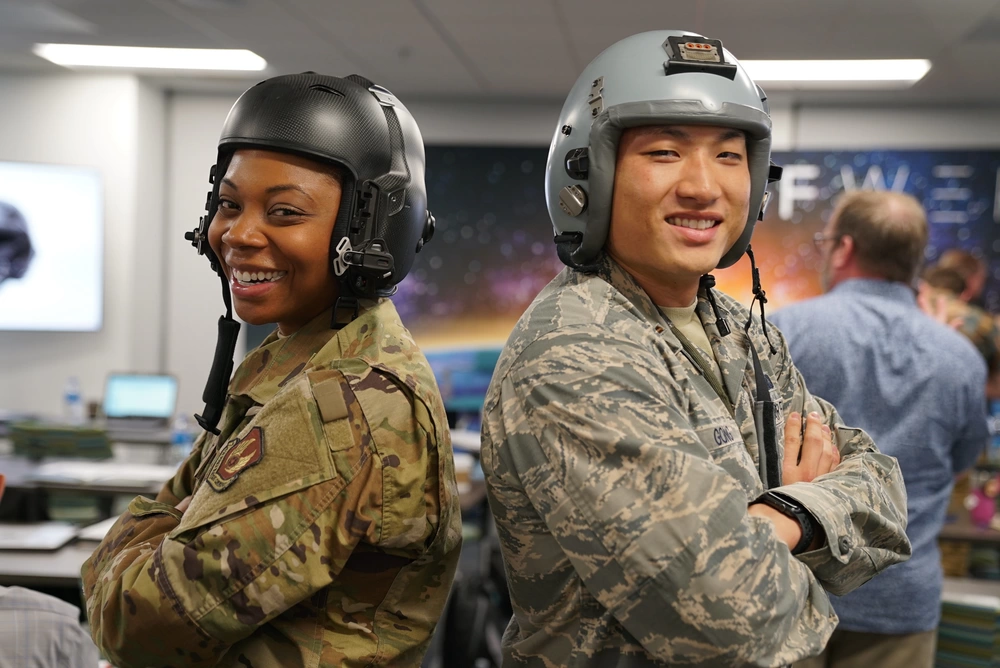
A decade-long problem needed a different approach.
The U.S. Air Force needed a new fixed-wing aircrew helmet.
The existing helmet relied on technology originating in the 1980s and had not kept pace with advances in materials, manufacturing, ergonomics, safety and wearable technology emerging in sectors such as motorsport, professional sport and commercial aviation.
The problem wasn't new.
Over the previous decade, traditional acquisition approaches had cost millions of dollars and consumed years of effort, yet repeatedly generated only a single proposal against the Air Force's requirements.
The challenge was therefore bigger than finding another supplier. The Air Force needed access to different people, different technologies and different ways of thinking.
- Almost a decade
- Millions spent
- Limited supplier ecosystem
- Typically one proposal
- Whole-system requirement
- 101 submissions
- 4 countries
- Cross-industry participation
- Component + system solutions
- Companies contracted within 20 weeks
The best solution didn't necessarily live inside the defence industry.
Potential answers to the helmet challenge existed across industries that would rarely meet inside a conventional defence procurement process.
Expertise could be found in motorsport, cycling, professional sports, concussion research, advanced textiles, electronics, biometrics, academia and established defence manufacturing.
AFWERX Challenge was designed to open the aperture. Rather than asking the same ecosystem to respond to another tightly prescribed specification, the process brought Air Force problem owners together with traditional and non-traditional innovators to explore the problem from multiple perspectives.
ROCeteer supported AFWERX in designing and delivering this collaborative challenge process, led by Mark Rowland.
The breakthrough came from changing the conditions.
The innovation was not simply crowdsourcing more ideas. Collaboration was deliberately designed into the process.
Discover
Understand the real problem before asking for solutions.
The team examined previous procurement attempts, existing requirements and the operational experience of aircrew.
Key issues included weight distribution, stability when equipment was added, thermal management, impact and noise protection, compatibility with other equipment, and fit across different body types and head shapes.
Align
Bring radically different perspectives around the same challenge.
A two-day Challenge Definition Workshop brought together Air Force stakeholders, end users, industry experts and innovators. Perspectives included lessons from organisations such as the NFL and NHL on concussion and impact protection.
One critical decision emerged: instead of requiring companies to propose an entire military helmet, organisations could submit components and subsystems. That decision dramatically widened who could participate — and created the possibility of combining technologies from multiple companies.
Activate
Go looking for innovators rather than waiting for them.
The challenge used plain English, strong visual communication and active outreach beyond conventional government procurement channels, reaching into NASCAR, MotoGP, FIA, NFL, outdoor sports, universities, electronics, biometrics, advanced textiles and helmet manufacturers.
After a one-month crowdsourcing campaign, 101 submissions had been received from four countries.
Publishing a challenge isn't crowdsourcing. You have to build and activate the community.
What if competitors could also become collaborators?
Traditional procurement typically encourages suppliers to protect their ideas and compete independently. AFWERX deliberately created different conditions.
Submissions were made visible to other participants, allowing companies to discover complementary technologies and potential partners.
At the Las Vegas Showcase, every company received the same booth space regardless of size. A social event was held before formal evaluation specifically to help participants meet each other. Dedicated time and space were then created for helmet manufacturers and component companies to explore how their technologies could work together.
Transparency, connection and collaboration were designed into the procurement process rather than left to chance.
Collaboration wasn't an event. It was part of the system design.
101 ideas became new combinations of capability.
Thirty-six teams ultimately participated in the Showcase. Sixteen progressed into detailed discussions. Three complete helmet-system companies and seven component companies were selected for prototyping.
The component companies received funding independently, allowing them to continue developing their technologies while exploring collaboration with the complete helmet-system manufacturers.
This changed the question.
Which company has the best solution?
Which combination of capabilities can create the best solution?
The process didn't just discover a better supplier. It created connections that hadn't existed before.
By December 2021, two helmet systems remained in final operational testing. One came from Gentex, an established military helmet manufacturer.
The other came from LIFT Aviation — a company that had never previously manufactured a military helmet — working in partnership with six component manufacturers it had not worked with before the Challenge.
That is the Collaboration Dividend.
The Air Force gained access to technologies and organisations outside its traditional supplier network. Component manufacturers gained access to opportunities they could not necessarily pursue independently. Helmet manufacturers gained technologies they did not possess themselves.
And organisations that entered the challenge as individual solution providers began combining their capabilities into integrated systems.
LIFT Aviation progressed to final operational testing with six component manufacturers it had never worked with before the Challenge.
The value wasn't simply finding more ideas. It was creating new combinations of capability.
Why did it work?
A consequential shared challenge: create a safer, better-performing helmet for Air Force aircrew.
Bring defence experts together with perspectives and technologies from entirely different industries.
Create structured opportunities for government, end users, manufacturers and component specialists to interact.
Use transparent communication, equal treatment, rapid feedback and predictable timelines.
Connect collaboration directly to prototyping, funding, testing and potential procurement.
Enable partnerships and solutions that individual organisations could not create alone.
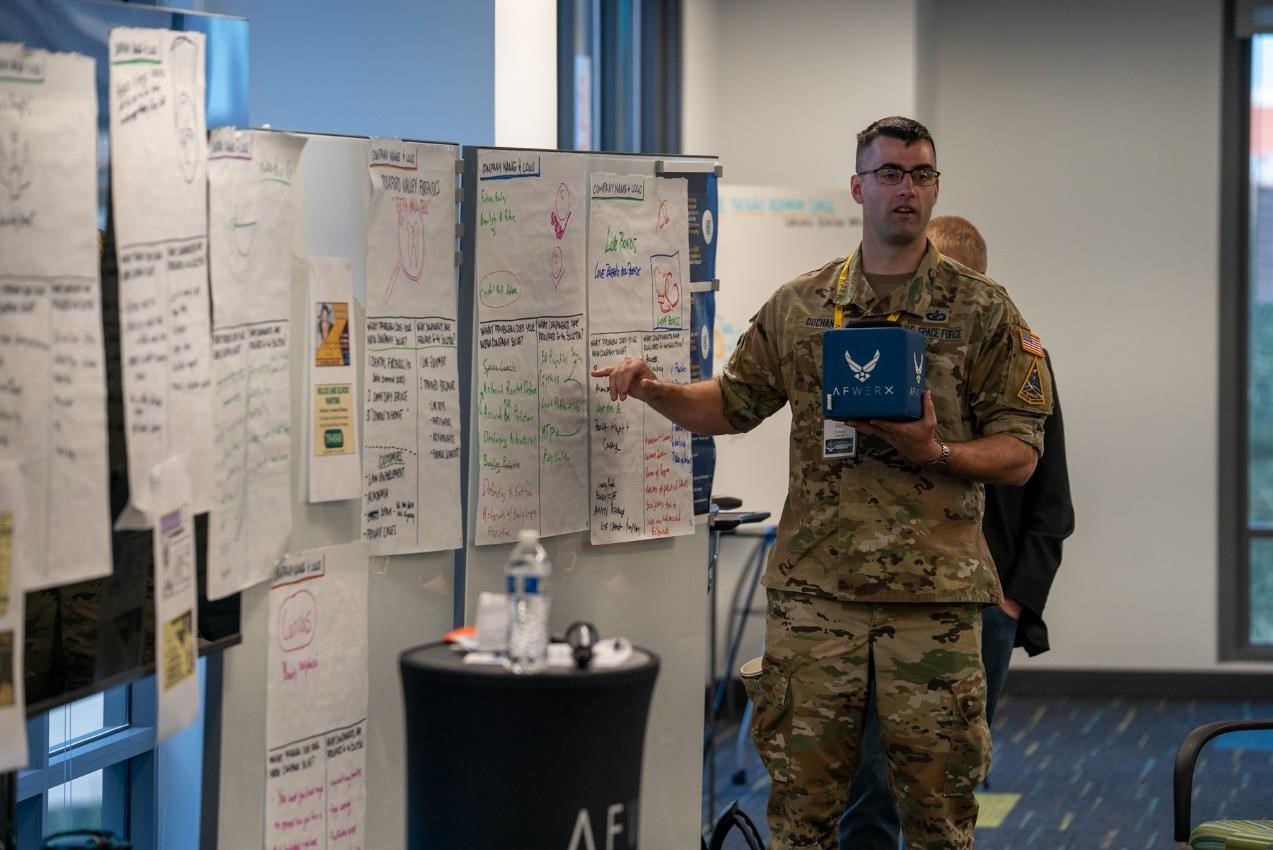
It was a collision space for ideas.
Three principles that travel.
Change who participates, change what becomes possible.
When the same problem is repeatedly presented to the same ecosystem, similar answers tend to emerge. Expanding the problem-solving system creates access to new knowledge, technologies and possibilities.
Collaboration has to be designed.
Putting organisations in the same room isn't enough. Transparency, equal participation, networking, physical space, incentives and pathways to action all influence whether meaningful collaboration occurs.
Competition and collaboration can coexist.
Companies could still compete for investment while identifying opportunities to combine complementary capabilities. Sometimes the strongest solution isn't one organisation. It's a new combination of organisations.
Your hardest challenge may not need another supplier. It may need a better way for people to collaborate.
We design collaboration systems that connect the right people, perspectives and capabilities — and turn shared challenges into collective action.