What if a climate festival was designed as a system for change?
Adelaide Climate Action Week invited an entire community to participate in climate action. Across 98 events and 58 venues, thousands of people from government, business, climate technology, research, finance, community, culture and civil society came together to learn, connect and act.
ROCeteer and Climate Cavalry helped design the strategy and collaborative infrastructure behind the inaugural festival — from distributed governance and systems architecture to AI-assisted connection, Web3 experimentation and the integration of the Inner Development Goals.
The result wasn't simply a successful week of events. It was community infrastructure for climate action.
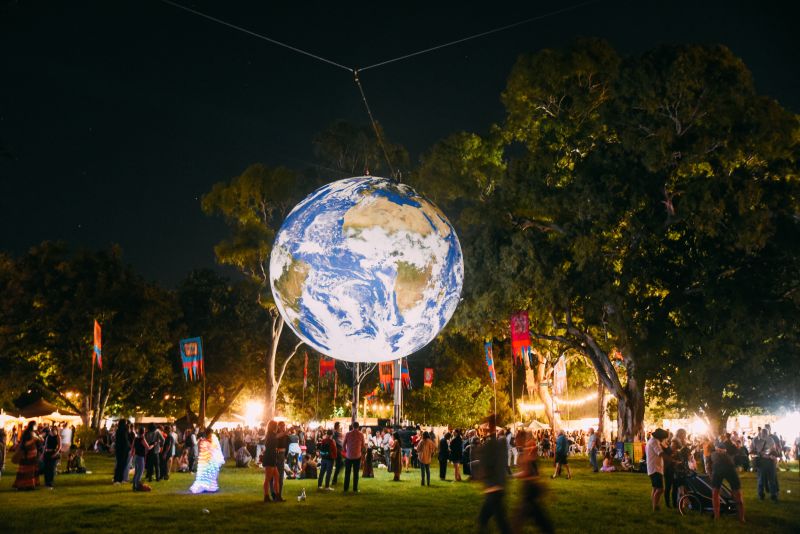
Adelaide Climate Action Week was a collective effort involving Climate Cavalry, GAIA Imperative, event organisers, sponsors, partners, volunteers, venues and the wider South Australian climate community.
Climate change is a systems problem. Why would we respond with another conference?
Climate action cannot be delivered by government, business, researchers, communities or innovators independently. It requires all of them.
Adelaide Climate Action Week was created around a different proposition. Instead of designing a centrally controlled conference and asking people to attend it, create a platform through which the entire community could participate.
The role of the central team would be to provide enough shared purpose, infrastructure and connection for hundreds of independent contributions to become one coherent Climate Action Week.
- Organisations could create their own events.
- Venues could open their doors.
- Partners could contribute resources and expertise.
- Communities could bring their own priorities.
- Individuals could discover where they belonged.
Don't create all the action. Create the conditions that allow action to emerge.
From event organiser to system steward.
ROCeteer and Climate Cavalry worked with the wider ACAW team to develop the strategy, business case, impact model and collaborative architecture for the inaugural week.
But the objective was never for the central team to create everything. The model was deliberately distributed.
The central team became the connective tissue between the contributions of hundreds of other people and organisations.
By the end of the week the community had created 98 unique events across 58 venues, generating 5,144 registrations from 2,114 unique participants.
ROCeteer didn't create 98 events. The community did. And that was the point.
A collage or mosaic showing very different ACAW event formats, venues and audiences across the week.
Stewardship, not ownership.
One of the most important pieces of intellectual property developed for ACAW was its operating model. Rather than use a conventional hierarchical event structure, the team developed a circle-based framework influenced by sociocracy and distributed governance.
The Team Charter described the team's purpose as creating and serving the vessel that enables Adelaide Climate Action Week to emerge and flourish.
The team explicitly positioned itself as custodians, not owners.
Decision-making was based on consent rather than majority voting or requiring complete consensus.
Connecting ACAW with the actors required for climate action — industry, government, finance, climate and nature solutions, academia, NGOs, community organisations and health.
Providing infrastructure including project management, governance, program development, digital platforms, communications, volunteering, finance and impact measurement.
Connecting the system and making the decisions that affect the whole.
Good enough for now. Safe enough to try.
The organising team was designed to behave more like the collaborative system it hoped to create.
Put the mission at the centre. Not the organisation.
ROCeteer helped develop a circular systems model showing how the different actors required for climate action related to one another. At the centre sat stewardship. Around it sat the major actors, and around those the support capabilities required to enable collective action.
Critically, Kaurna Elders, First Nations peoples, Pacific Island peoples and Youth were integrated through the architecture rather than represented as stakeholder groups at the edge.
And the entire human system was shown inside the wider planetary system.
Kaurna Elders · First Nations peoples · Pacific Island peoples · Youth — integrated through the architecture
The redesigned ACAW circular systems model, rendered in the contemporary ROCeteer visual language.
We are not above the system we are trying to change. We are part of it.
People don't only think their way into collective action. They have to feel part of something too.
ACAW wasn't designed purely around the transfer of climate information. It also sought to create belonging, optimism, reflection, agency and shared purpose.
Working with Wendy Harper, GAIA Imperative and the Inner Development Goals community, ACAW integrated the Inner Development Goals into the design of the festival.
Events were encouraged to help participants connect with others, reflect on what they had experienced and identify how they might act.
ACAW became the first climate event in Australia to integrate the Inner Development Goals across its wider festival design.
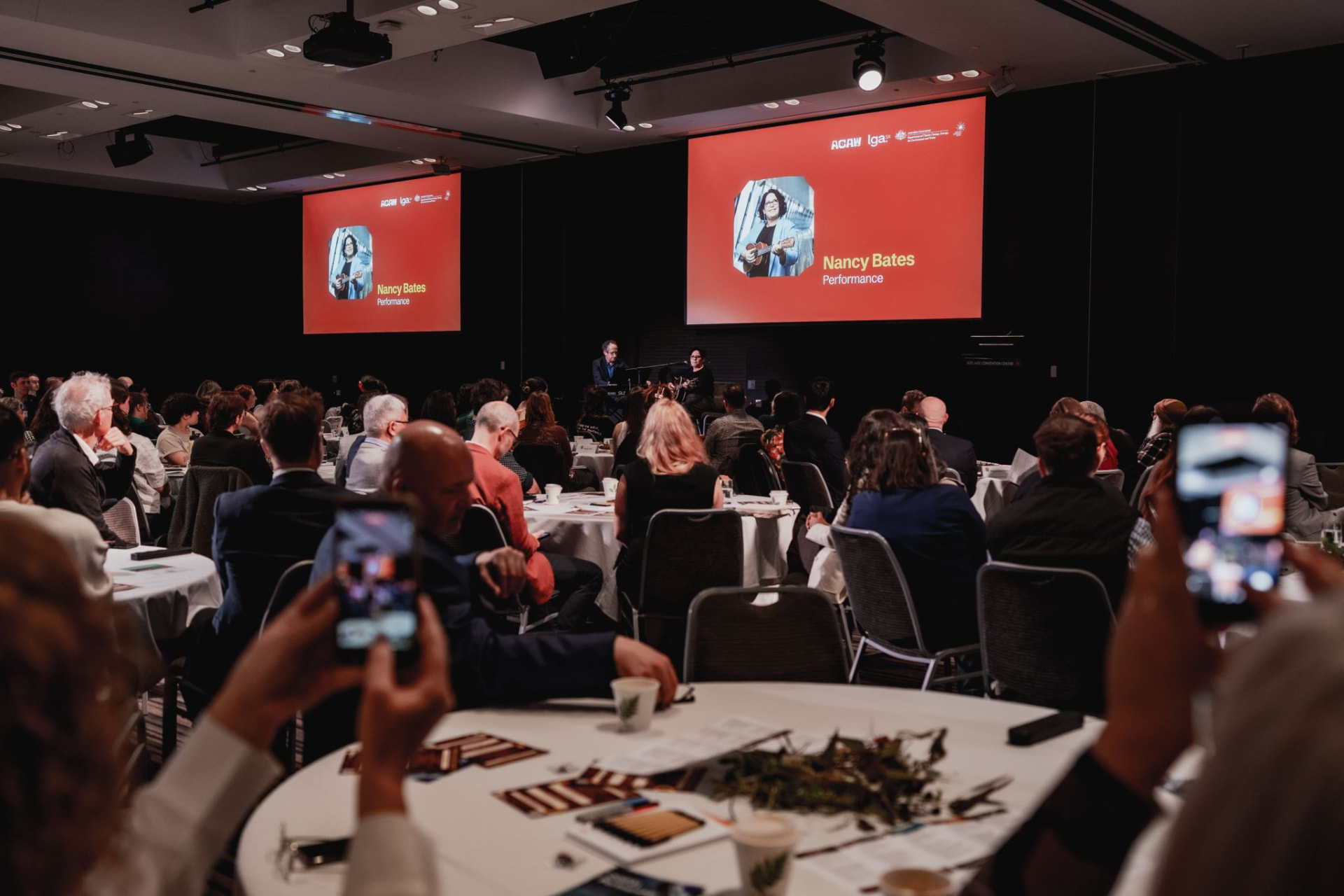
Sometimes you can feel a system beginning to move.
One moment at the opening captured something statistics could never measure. Climate-tech leader Mick Liubinskas arrived with his laptop open and plenty still competing for his attention.
During Nancy Bates' performance of “Talkin' Bout a Revolution”, people across the room began joining in.
He later shared that he found himself crying. Others described experiencing the same sense of solidarity and emotional connection.
This wasn't decoration around the “real” climate work. It was part of the work. Complex change requires knowledge and technology. But it also requires hope, belonging, identity and the feeling that we are not acting alone.
The audience became a choir.
From event app to connection infrastructure.
ROCeteer also explored how emerging technology could increase the value created between participants. Using Lovable, the team developed the My ACAW platform.
It integrated with Humanitix so participants could bring their registered events into one personalised experience, see what was happening across the festival and discover other opportunities.
But the more interesting feature was connection. Participants could create profiles and use AI-assisted matchmaking to identify people across ACAW who might be valuable to meet.
The technology changed. The question didn't. How do we increase the probability of a valuable connection?
My ACAW app screenshots showing the personalised program and AI-assisted connections.
What if the governance of a movement could be transparent too?
ACAW experimented with Hypha, a Web3-enabled platform for participatory organisations. The purpose was not cryptocurrency speculation. It was transparency and participation.
Community proposals and decisions could be made visible rather than disappearing into private email chains. During the inaugural experiment, four community proposals were created through the governance process.
The team also explored contribution credits and ACAW utility tokens — a way to recognise forms of contribution that conventional financial accounting often fails to see.
These tokens were not intended to operate as speculative financial assets. They represented participation and contribution — a form of visible kudos that could potentially be recognised or exchanged within the community.
A transparent operating system for climate collaboration.
Hypha's description of the ACAW model. This work was experimental and evolving rather than a mature or universally adopted operating model.
Hypha proposal and governance interface showing community proposals in the open.
The goal wasn't to create an audience. It was to create participation.
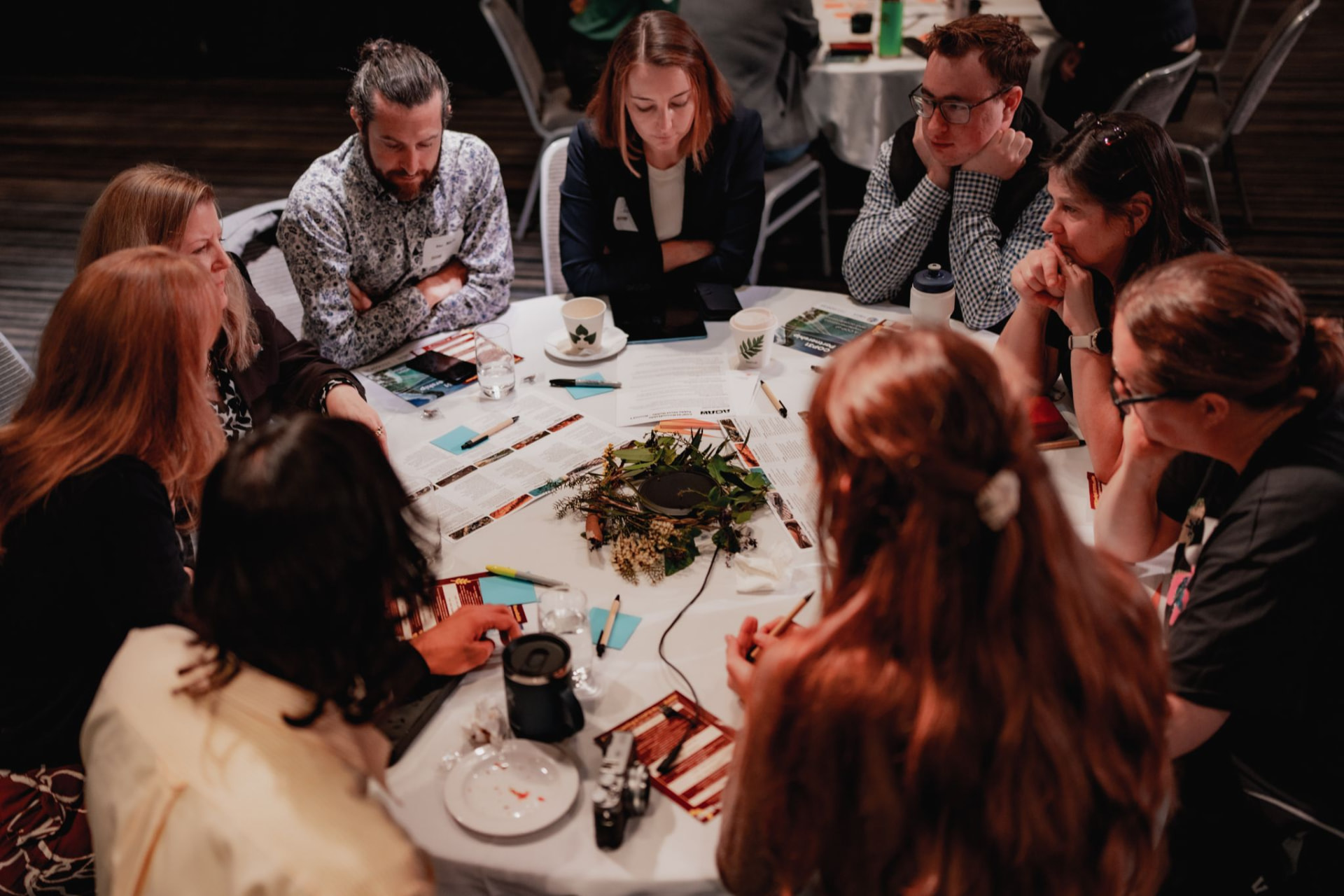
The opening event illustrated this philosophy. Hundreds of climate leaders participated in a multilayered roundtable process, bringing perspectives together and contributing ideas toward the Adelaide Communiqué and the wider conversation leading toward COP31.
Facilitator Matthew Wright-Simon later described the spirit as “yes, and…” — people building on each other's thinking instead of merely presenting their own.
He described ACAW as a joyful, purposeful week of collective leadership.
- 01Attendance
- 02Participation
- 03Connection
- 04Shared sensemaking
- 05Collective contribution
- 06Action
So many diverse voices. One community.
The numbers tell one part of the story. But the public reflections from participants repeatedly used a different language.
The inaugural festival demonstrated that the appetite for climate participation existed. The opportunity was to create a structure capable of connecting it.
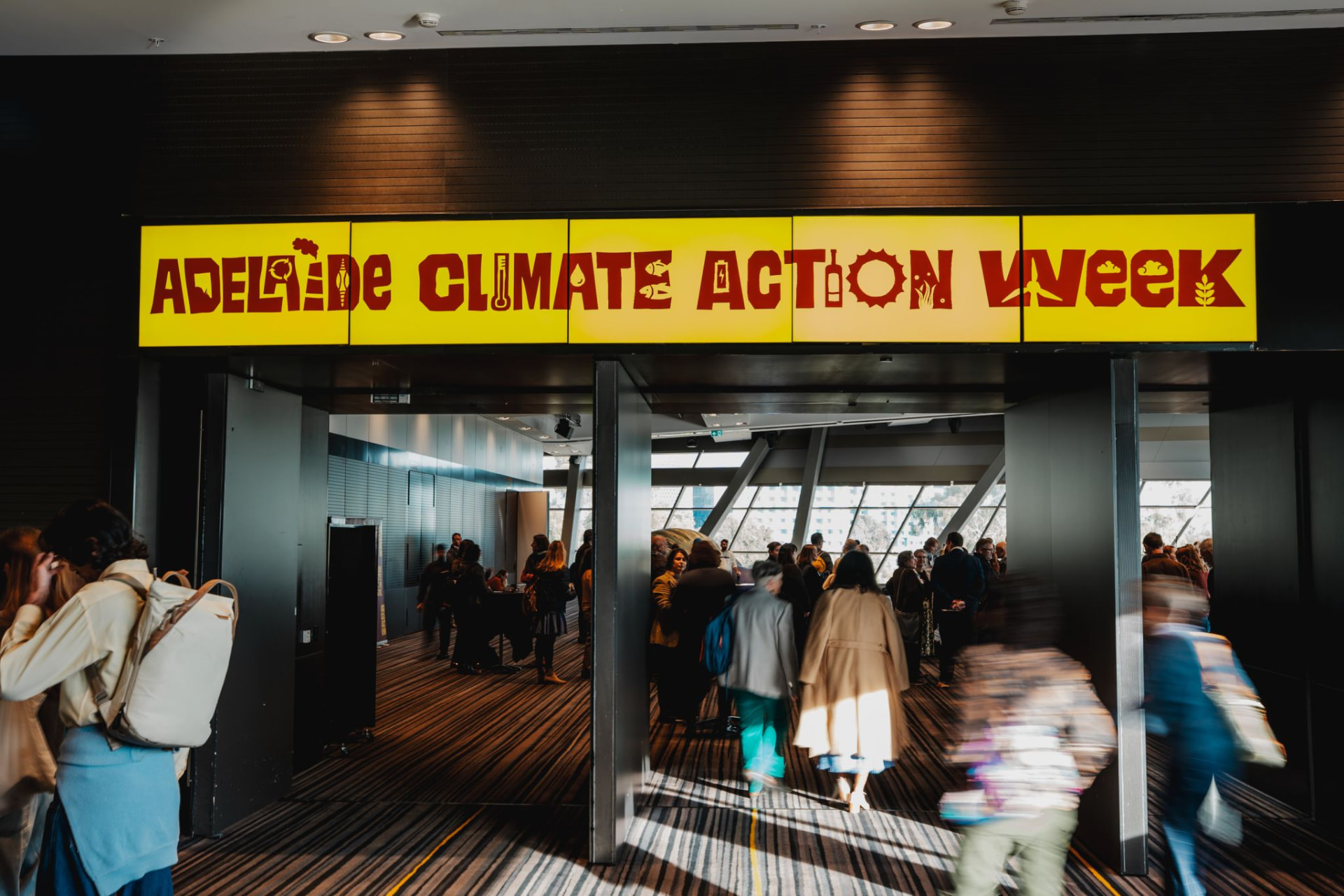
The return wasn't central control. It was distributed action.
A relatively small organising team could never have independently produced the diversity, expertise, creativity and reach represented across Adelaide Climate Action Week.
Instead, it helped create the conditions through which many more actors could contribute: shared purpose, governance, technology, participation pathways, trust, human capability, connection and opportunities for action.
ROCeteer didn't create 98 events. The community did. That is the Return on Collaboration.
What did the collaboration create?
98 independently created events transformed organisations from attendees into contributors.
Thousands of people came together, and 200 AI-assisted matches created deliberate opportunities for new relationships.
Roundtables and community processes allowed diverse perspectives to contribute to shared understanding and future action.
Participants described belonging, optimism, solidarity, joy and collective leadership.
Governance frameworks, systems maps, digital infrastructure and other IP created during ACAW can now support future years and potentially other collaborative climate initiatives.
Five principles that travel.
Design the system, not just the event.
An event ends. Relationships, infrastructure, governance and community capability can endure.
Give people meaningful ways to participate.
People support what they help create.
Collaboration needs human and digital infrastructure.
Technology can help people find each other and increase transparency. Trust, purpose and relationships remain human.
Inner change and systems change belong together.
Complex change requires people capable of navigating uncertainty, difference, interdependence and conflict.
Stewardship can unlock more than ownership.
The central team did not need to control every contribution for the week to feel coherent. It needed to create and protect the conditions for others to contribute.
The first week proved the concept. The bigger question is what happens next.
ROCeteer and Climate Cavalry have developed a strategy for ACAW to increase its impact over future years.
The opportunity is not simply to create more events.
- Strengthen the climate-action community between festivals.
- Capture and share the knowledge generated.
- Deepen collaboration between sectors.
- Create clearer pathways from ideas to action.
- Improve measurement of collaborative outcomes.
- Develop reusable governance and technology infrastructure.
- Explore how parts of the ACAW model could be replicated elsewhere.
Not just more events. More connection. More capability. More collective action. More change.
That's what a system beginning to move looks like.
Climate change is too complex for any government, organisation, industry or community to solve independently. Adelaide Climate Action Week experimented with a different question.
Not: who is responsible for solving this? But: how do we create the conditions in which all of us can contribute?
Across one week in Adelaide, thousands of people began answering that question together.
A photograph conveying collective energy rather than a conventional posed event photo.
The magic is in the connections.
What could your system achieve if more people could act together?
ROCeteer designs the conditions that help organisations, industries and communities move from fragmented effort to collective action.